
Key takeaways
- Keep one audience, one offer and one primary action in focus.
- Match the promise made in the ad or search result exactly.
- Use proof and clear answers to reduce risk and objections.
- Make the form easy on mobile and measure every conversion.
In this article
Message match and audience intent
A visitor arrives on a landing page with a specific expectation set by an ad, email or search result. If the headline does not match that promise, many will leave.
- The headline repeats the core promise of the ad or search query.
- Imagery and colours feel continuous with the ad creative.
- The page speaks to one audience segment.
Page hierarchy and offer clarity
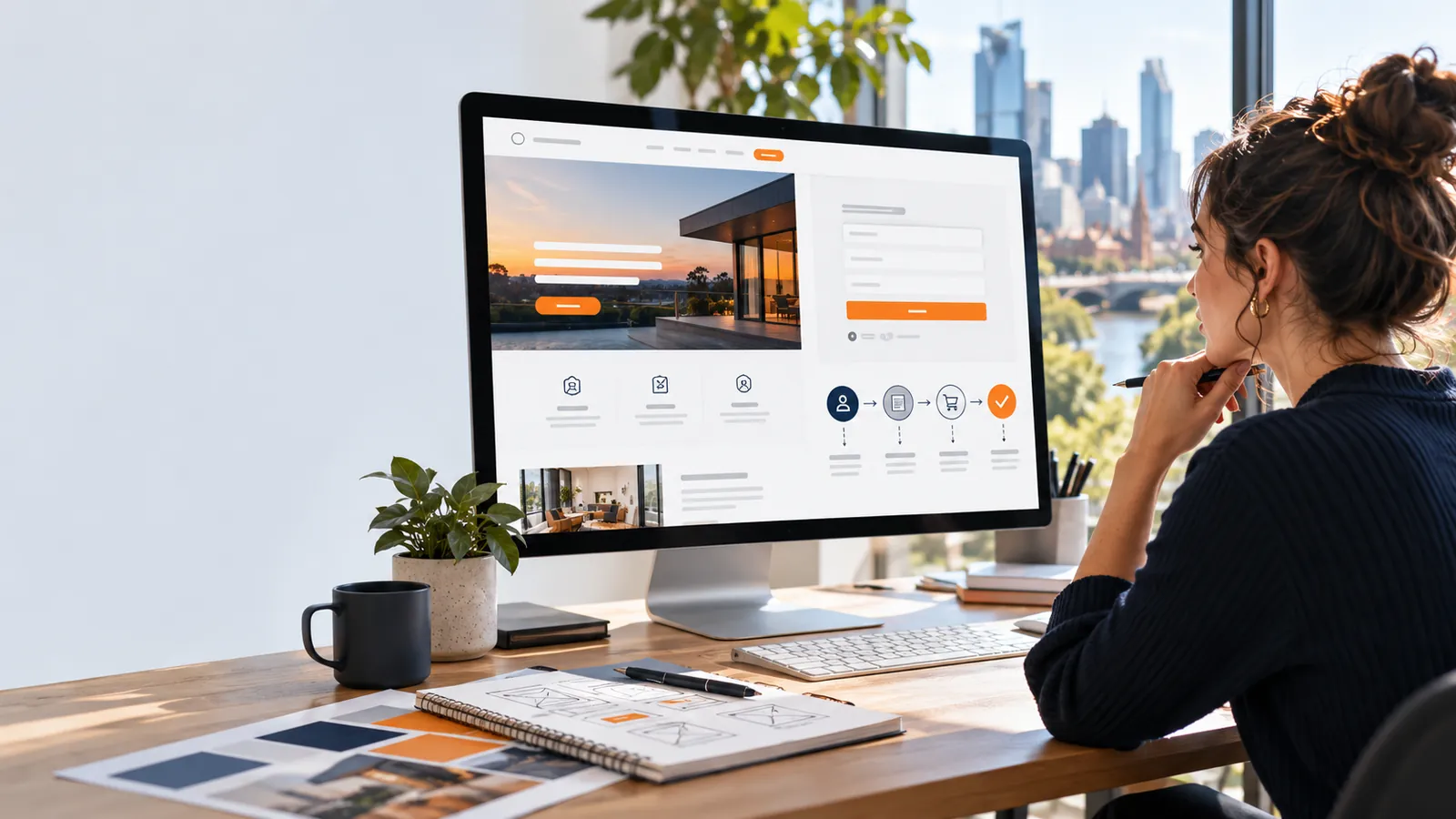
Structure the page so the most important information appears first.
- Headline: what the offer is and who it is for.
- Supporting line: the main benefit or outcome.
- Primary call to action: visible without scrolling on most screens.
- Detail: what is included, how it works and what it costs or how pricing is determined.
- Proof and FAQs: evidence and answers to objections.
- Repeat call to action.
Proof, objections and risk reduction
People hesitate when they are unsure. Address that directly:
- Show relevant examples, credentials or genuine testimonials.
- Explain the process and what happens after they submit.
- Answer common objections about time, price or commitment.
- Clarify guarantees or policies only where you can genuinely honour them.
Form design and mobile usability
- Ask only for information you need to respond.
- Use clear labels, not placeholder-only fields.
- Use appropriate keyboard types for phone and email fields.
- Show helpful error messages beside the field.
- Confirm submission clearly and explain the next step.
Performance, tracking and testing
- The page loads quickly on mobile networks; see our Core Web Vitals guide.
- Conversions are tracked in analytics and ad platforms.
- Campaign parameters are preserved so you know which ads perform.
- Tests change one meaningful idea at a time and run long enough to be reliable.
Common landing-page mistakes
- Sending paid traffic to the home page instead of a focused page.
- Several competing calls to action.
- Generic stock imagery that does not reflect the offer.
- Hiding the price approach or next step.
- Forms that are long, confusing or broken on mobile.
Our digital advertising and UX / UI design services cover landing page design, and our guide to conversion rate optimisation explains how to keep improving results. Contact us to plan your next campaign page.
Frequently asked questions
Should a landing page include the main navigation?
Often it is better to reduce or remove navigation so visitors focus on the offer. Keep essential trust links such as privacy and contact details available.
How long should a landing page be?
Long enough to answer the questions people need answered before acting. A simple offer may need a short page, while a considered purchase needs more detail and proof.
What should we test first?
Start with the elements most likely to change behaviour, such as the headline and offer clarity, rather than small visual details.
Can you design landing pages for our ads?
Yes. We design campaign landing pages alongside ad creative so the message, visuals and tracking work together.
Related services

Melbourne Design Studio is a design and development studio in Truganina, Melbourne, with more than 20 years of design and user experience work. Our team plans, designs and builds websites, apps, brands and campaigns, and writes these guides to help business owners make informed decisions.
Meet the team