
Key takeaways
- Packaging must attract attention, communicate clearly and survive production.
- Plan the information hierarchy before decorating the pack.
- Work from the printer's dieline and confirm materials and print methods early.
- Have regulated claims and mandatory information checked by the right specialists.
In this article
Product, audience and retail context
Good packaging starts with where and how it will be seen.
- Where is it sold: supermarket, boutique, online or direct?
- What does the competition look like on the shelf?
- Who is buying, and what do they need to know in a few seconds?
- How will the pack appear in online thumbnails?
Information hierarchy and brand recognition
Decide what the shopper should notice first, second and third. Typically:
- Brand recognition.
- Product name and type.
- Key benefit or variant (flavour, scent, size).
- Supporting claims and details.
A strong hierarchy also helps a product family. Consistent placement of the brand and clear variant colours make the range easy to navigate.
Dielines, materials and print constraints
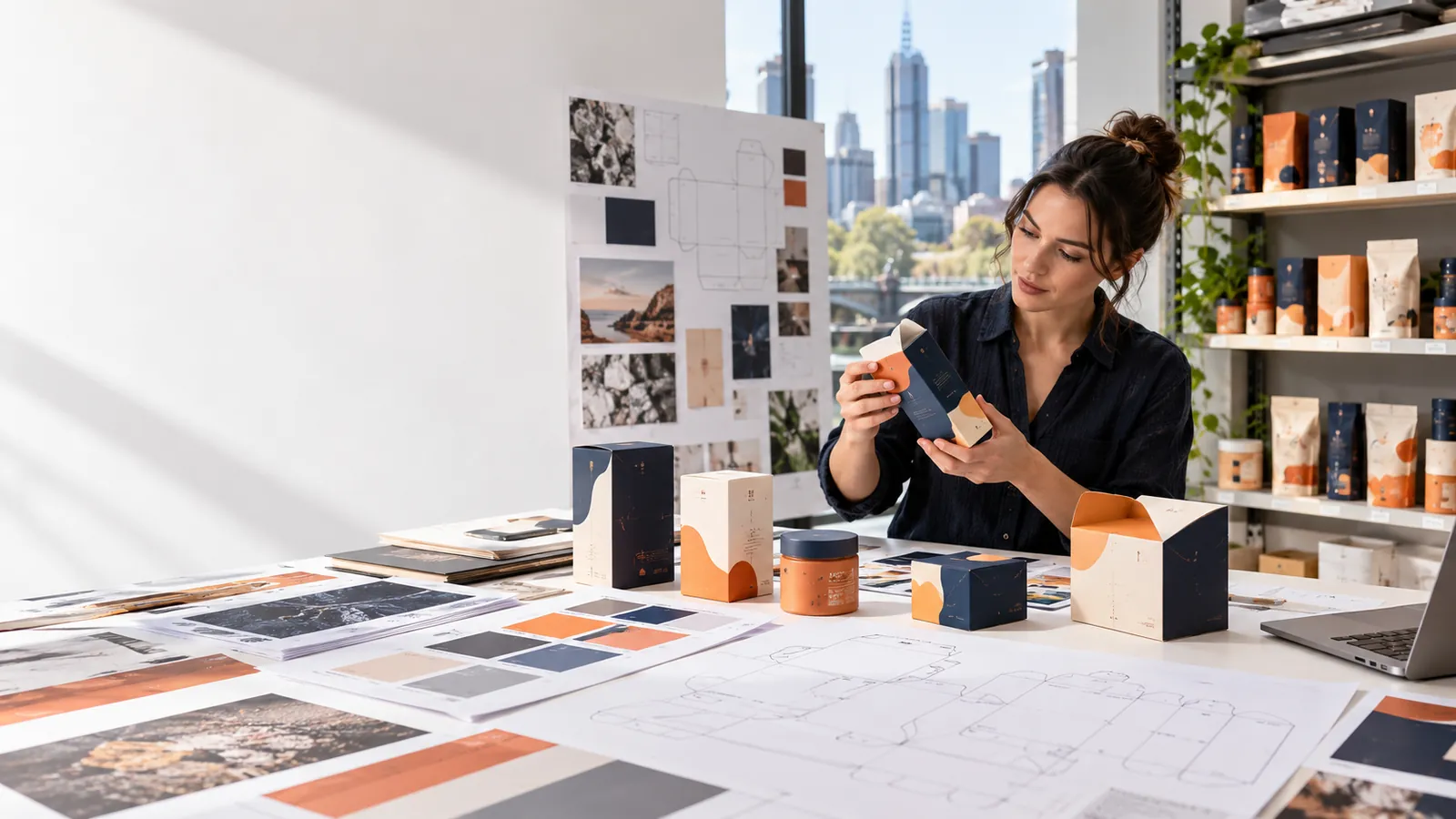
- Obtain the dieline from your printer or packaging supplier before design starts.
- Confirm the material, finish and printing method, as these affect colour and detail.
- Allow for bleed, safe areas, folds and glue flaps.
- Consider special finishes such as foils or embossing early, as they need separate artwork layers.
Compliance and barcode considerations
Many products carry mandatory information such as ingredients, warnings, country of origin or measurement marks. Requirements depend on the product category. Have the content checked by the appropriate specialist or authority, such as Food Standards Australia New Zealand for food. Barcodes should be obtained through GS1 Australia and placed according to their guidance.
Prototypes, mockups and proofing
Digital mockups help with early decisions, but physical prototypes reveal problems with colour, readability and construction. Always review a printed proof before a full production run.
Creating a scalable product family
Design the system with future variants in mind. Define which elements stay fixed and which change by product, so new flavours or sizes can be added quickly and consistently.
See packaging examples in our work, explore our graphic design service or contact us.
Frequently asked questions
What is a dieline?
A dieline is the flat template showing the shape, folds, cuts and glue areas of a pack. Artwork is designed to fit it precisely.
Do you design labels as well as boxes?
Yes. We design labels, boxes, pouches, sleeves and other formats, prepared to your printer's specifications.
Can you help with mandatory labelling information?
We lay out the information you supply, but the content and compliance of regulated information should be confirmed by you and the relevant specialists.
Can we see the packaging before printing?
Yes. We provide digital mockups and recommend printed proofs or prototypes before full production.
Related services

Melbourne Design Studio is a design and development studio in Truganina, Melbourne, with more than 20 years of design and user experience work. Our team plans, designs and builds websites, apps, brands and campaigns, and writes these guides to help business owners make informed decisions.
Meet the team